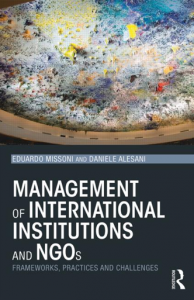
Management of International Institutions and NGOs

Evento dibattito su:
“Management of International Institutions and NGOs”
Mercoledì 9 aprile, 17-19:30

LUISS, viale Romania 32 Aula 304B
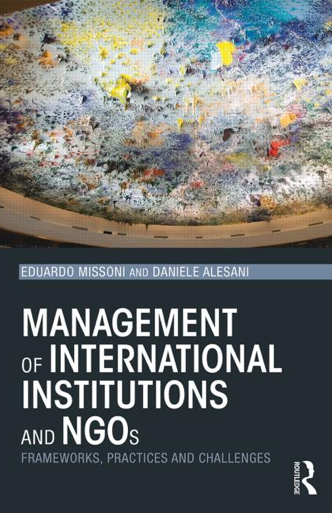
In occasione della pubblicazione del libro: “Management of Institutions and NGOs: Frameworks, Practices and Challenges”, a cura di Eduardo Missoni (Bocconi) e Daniele Alesani (UNFPA) (London, Routledge, 2013), ne discutono con gli autori:

  • Giampaolo Cantini, Direttore Generale della Direzione Generale Cooperazione allo Sviluppo (DGCS), Ministero degli Affari Esteri
  • Gherardo Casini, Direttore dell’ufficio UNDESA di Roma
  • Diana Copper, ex studentessa LUISS e Commonwealth Secretariat
  • Maura Viezzoli, Head of Higher Education and Liaison with Private Donors, CISP

Chair:

  • Raffaele Marchetti, LUISS Guido Carli

Presentazione e dibattito avverranno in lingua inglese.

Per registrazioni e informazioni:
LUISS School of Government Email: sog@luiss.it

Pubblicato in Uncategorized | Lascia un commento

Management of International Institutions and NGOs

Evento dibattito su:
“Management of International Institutions and NGOs”
Mercoledì 9 aprile, 17-19:30

LUISS, viale Romania 32 Aula 304B
In occasione della pubblicazione del libro: “Management of Institutions and NGOs: Frameworks, Practices and Challenges”, a cura di Eduardo Missoni (Bocconi) e Daniele Alesani (UNFPA) (London, Routledge, 2013), ne discutono con gli autori:

  • Giampaolo Cantini, Direttore Generale della Direzione Generale Cooperazione allo Sviluppo (DGCS), Ministero degli Affari Esteri
  • Gherardo Casini, Direttore dell’ufficio UNDESA di Roma
  • Diana Copper, ex studentessa LUISS e Commonwealth Secretariat
  • Maura Viezzoli, Head of Higher Education and Liaison with Private Donors, CISP

Chair:

  • Raffaele Marchetti, LUISS Guido Carli

Presentazione e dibattito avverranno in lingua inglese.

Per registrazioni e informazioni:
LUISS School of Government Email: sog@luiss.it

Pubblicato in Governance Globale, Istituzioni Internazionali, Organizzazioni Non Governative, Sviluppo | Lascia un commento

Managing International Institutions and NGOs – Interview with the authors


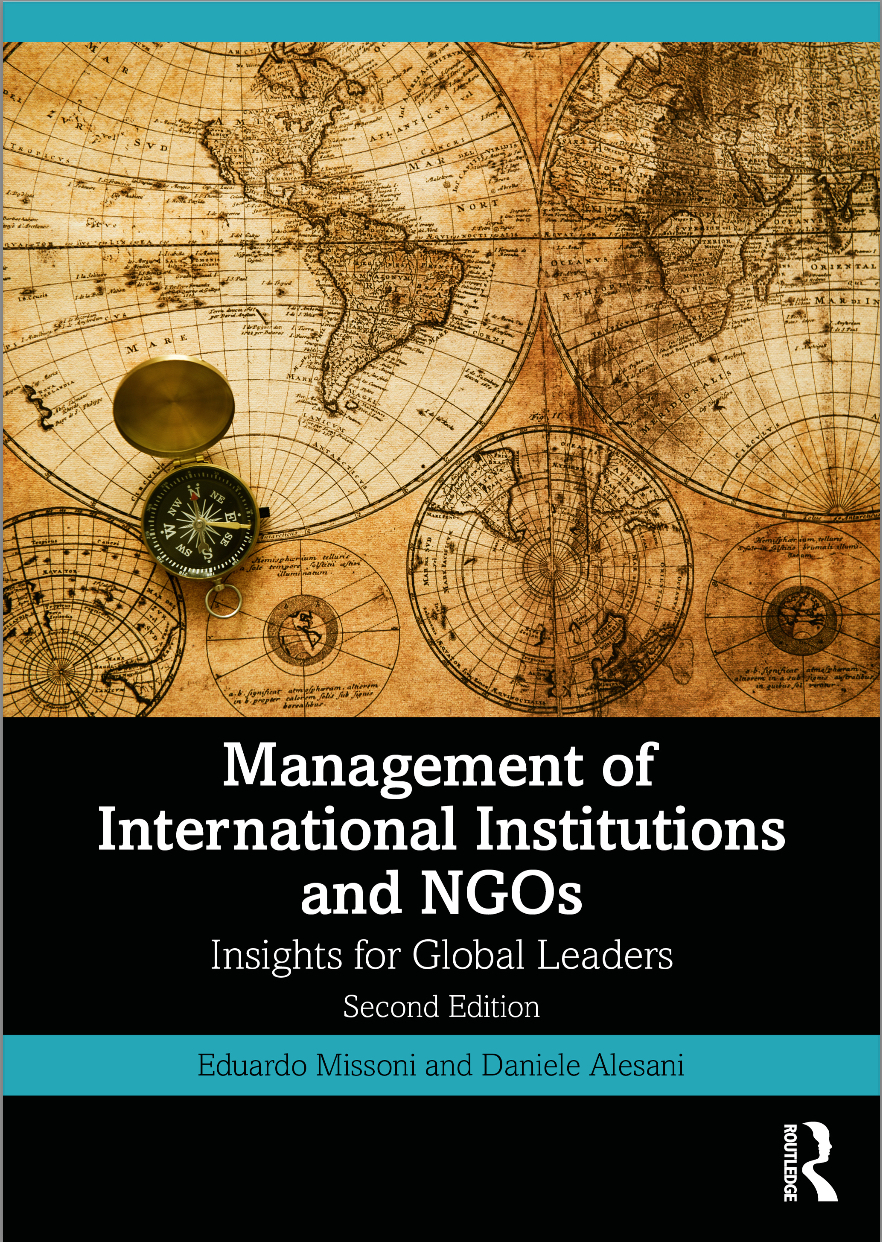
Cover_Missoni_AlesaniDaniele Alesani and Eduardo Missoni, authors of ‘Management of International Institutions and NGOs: Frameworks, practices and challenges‘, answer some questions about their book, the ‘one-stop-shop’ for readers looking to unravel the complexities of managing modern international organizations.

1. Congratulations on the publication of your book! What led you to writing it?

Along our entire careers we have worked with international organizations as professionals, consultants and trainers. We have seen these organizations face significant challenges, change and respond to the growing complexity of the international cooperation sector and to the demands of donors to ‘do more with less’. We witness international organizations strive to become more efficient, effective and to better fulfill their mandate. Notwithstanding the large body of institutional knowledge and professional documentation on the modernization of international organizations, literature has largely neglected investigating them under a managerial perspective. With this book we aimed to offer an initial response to questions such as ‘what is and why do we need management’ in international organizations and ‘what are international organizations doing to become more efficient and effective’. Although public and NGO management has been around for a long time, we were determined to identify and explain the main features of a ‘tailored’ approach to International Institutions (IIs) and international non-governmental organizations (INGOs), based on their institutional and operational specificities, and do so with a practical, hands-on approach.


2. Can you describe your book in one sentence?

This book is a one-stop-shop to unravel the complexities of managing modern international organizations; a must-have for anyone interested in making an impact in these organizations.


3. Can you elaborate on why you think this book is original and unique?

We brought together and analysed IIs and INGOs as organizations. International literature extensively explored them, but rarely, if ever, took an interest in them as independent and complex organizations and actors of the evolving international cooperation sector.

We did not flatly adopt any existing theoretical framework or theory, such as New Public Management, very ‘fashionable’ in literature both by believers and critics. Rather we explored a ‘tailored’ approach to management for IIs and INGOs based on their operational and institutional specificities. We did so by looking at the practices of real organizations, their challenges and successes.
We wanted to be the first to explain the international cooperation sector as a ‘market’ where actors compete and collaborate with their visions and strategies, try to win over vital resources to survive and grow and need to maximize the use of their financial and material resources to fulfill their mandates. We wanted to do so without under-estimating the inherently political nature of these organizations but giving proper identity to their managerial component.

We also had in mind the social entrepreneurs and founders of INGOs who are passionate and genius in what they do for their causes but often lack exposure to management frameworks, systems and practices. We wanted to provide them with the first practical and hands-on guide to improve the resource management of their organizations, build their profile, better understand their positioning within the international aid system. We wanted to give them a tool to benchmark themselves against best practices and find solutions to common management problems.


4. Who would be interested in reading your book?

We intentionally targeted a broad audience of students of international management, public administration and policy programs; policy makers and practitioners working for IIs and INGOs.
On the one hand, students will appreciate the comprehensive categorisation and analysis of the main actors of international cooperation and will acquire a well-rounded knowledge of this sector. Students with previous knowledge of business and public management will explore advanced themes related to the current practices and specific challenges of IIs and INGOs. Students interested in these organizations and without previous exposure to management will effectively run through the ‘building blocks’ of this field and concentrate on the specific managerial challenges faced by international organizations.

On the other hand, practitioners and managers working for international organizations will have the opportunity to strengthen their knowledge of the management theories and frameworks behind their daily job; they will gain practical knowledge highly transferrable to their organizations and they could benchmark their experiences and practices against detailed case studies. In particular, this book will be tremendously useful to social entrepreneurs, NGO funders and practitioners to quickly acquire hands-on knowledge on how to improve their organizations.


5. Are there any relevant world issues that your book relates to at the moment?

In the last decade, the international community started questioning the consolidated role and model of intervention of international organizations, pressing them to evolve, innovate, change, break the chain of dependence created by traditional international cooperation initiatives and create virtuous circles of self-reliance and growth.
At the same time, the years following the global financial meltdown have seen a dramatic increase in the expectations of member states and donors and the search for the best ‘Value for Money’ became a priority for international cooperation.

Mismanagement and ethical scandals such as Oil for Food repeatedly tainted the reputation of international organizations and called for greater transparency, better governance and management.
This book explores how international organizations are reacting to these trends. Organizations are doing so by developing their business model and partnership attitude, by building identifiable brands and profiles, and by implementing managerial reforms aimed to strengthen results orientation and accountability and to reshape decision making mechanisms, improve human and financial resource management. This book documents the successes, challenges and open issues of modern international organizations striving to modernize and become more efficient, effective and impactful.


4. Do you have plans for future books? What’s next in the pipeline for you?

Writing this book took several years of research, observation of organizations’ practices, and discussion with practitioners. This book is a first stepping stone for us; we intend to widely present it around the world to gather the reactions of academics and managers and the always interesting questions of students and practitioners. We look further to use it as platform to develop further research and continue exploring the burning questions on the management of international organizations.


Read the first section of this book now! Simply follow this link and click on the blue ‘View Inside this Book’ button on the book’s product page to read online.

Pubblicato in International Organizations | Contrassegnato , | Lascia un commento

Margherita Gabrielli 1916 – 2007 “Tracce di un percorso” – Mostra retrospettiva

Trieste_MG

Sabato 1° marzo, ore 18
Polveredarte
Piazza della Valle 3/a
TRIESTE

Nella pittura di Margherita Gabrielli – filosofa, storica dell’arte, pittrice e terapeuta – protagonisti sono colori e movimenti che originano direttamente dall’anima. La pittura di Margherita, come le sue altrettanto straordinarie rivelazioni storico-artistiche, traggono forte ispirazione dall’antroposofia e ci introducono a una dimensione spirituale che l’umanità deve ancora percorrere.

I nipoti dell’artista, Elisabetta, Eduardo, Dario e Folco hanno deciso di conservarne tutte le opere creando l’Associazione  Margherita Gabrielli, con sede presso l’Azienda Agricola Foffani a Clauiano (UD)
dove il 17 maggio 2014 verrà inaugurato uno spazio espositivo permanente.

Informazioni sull’ artista nel sito: www.margheritagabrielli.it

Pubblicato in Arte | Contrassegnato | Lascia un commento

Best wishes!

Christmas 2013 – New Year 2014

Best wishes!

Dear friends,

an increasing number among the youngest of you wish to orient their professional commitment toward something socially useful, something giving a deep ethical sense to their future work.
Others are engaged since many years in the building of a better world; they are never tired to struggle and continue to open new paths.

The world is not as we would like it to be. Much more than economic, the current crisis is social, cultural, environmental and moral. Powerful personal and private interests continue to put in danger the future of the majority of the world population and of the Planet itself.
It is more necessary and urgent than ever to invert the direction imposed by a system based on competition and individualism, greed and abuse, indiscriminate consumption, foolish exploitation of natural resources and a criminal environmental pollution.  Aiming at an unsustainable economic growth and measuring results with macroeconomic indicators, the real needs of the people and the values of human coexistence are put aside.

Therefore my wishes are for cooperation, solidarity, joint commitment in search of new ways to build a world where there will be space and care for all, including  for future generations.
It will give us joy to think that we are creating together that different possible world.

Best wishes!

Eduardo
www.eduardomissoni.info

Lascia un commento

Auguri!

Natale 2013 – Capodanno 2014

Care amiche e cari amici,

tra quelli più giovani di voi, sono sempre di più quelli che desiderano orientare il loro impegno professionale verso qualcosa di socialmente utile, verso un obiettivo che dia un significato profondo al proprio lavoro.
Altri amici sono da tempo impegnati nella costruzione di un mondo migliore, non si sono mai stancati di lottare e continuano a sperimentare nuovi percorsi.

Il mondo non è come lo vorremmo. Prima ancora che economica, la crisi è sociale, culturale, ambientale e morale. Potenti interessi personali e privati continuano a mettere a repentaglio il futuro della maggioranza degli abitanti della terra e persino del Pianeta stesso. È sempre più necessario e urgente invertire la rotta fissata da un sistema basato sulla competizione e l’individualismo, la cupidigia e la prevaricazione, consumi indiscriminati, un’irresponsabile sfruttamento delle risorse naturali e criminale inquinamento dell’ambiente. S’insegue un’insostenibile crescita economica infinita, e ci si misura con indicatori macroeconomici che dimenticano i bisogni veri delle persone e i valori della convivenza umana.

Dunque il mio augurio è di cooperazione, solidarietà, inclusione e impegno comune nella ricerca di nuove strade per la costruzione di un mondo dove non solo ci sia spazio e attenzione  per i bisogni di tutte e tutti, ma che ce ne sia anche per quelli delle generazioni future.
Darà gioia pensare che quel mondo diverso e possibile lo stiamo costruendo insieme.

Auguri!

Eduardo
www.eduardomissoni.info

Pubblicato in Auguri | Contrassegnato | Lascia un commento

New Book: Management of International Institutions and NGOs

Cover_Missoni_AlesaniManagement of International Institutions and NGOs

Frameworks, practices and challenges

By Eduardo Missoni and Daniele Alesani

International Institutions (IIs), International NGOs (INGOs) and Transnational Hybrid Organizations (THOs) play a hugely important role in the modern world economy. Despite having been studied by scholars from a range of disciplines, these organizations have never before been approached from a management perspective. This ambitious book analyzes the management challenges associated with international cooperation and sheds light on how these organizations have evolved as the political, economic and business environments have changed around them.

Covering an admirably broad canvas, the authors pursue two main objectives. Firstly, they explore the main management frameworks developed in the context of the corporate and national public/non-profit organizations and adapt them to the specificity of IIs and INGOs. This leads to the identification of a “tailored” approach to IO management based on their institutional and operational settings, stakeholder groups, core business, staff profile, and financial arrangements. Secondly, they “bring theory into practice” by linking frameworks to several case studies and best practices of organizations currently experimenting with management systems and tools, with case studies including the World Bank and the Gates Foundation.

This comprehensive textbook is a must-own resource for students and academics involved with studying and working with international organizations.

“A welcome one-stop shop to unveil the complex organizational variations generated in the last decades among IIs and NGOs and their impact in addressing the ultimate goal of a more peaceful, just and sustainable world for all.”

Mirta Roses Periago, Former PAHO/WHO Director

Get it from the Publisher

Pubblicato in International Organizations | Lascia un commento

Il futuro della cooperazione internazionale per la salute in un mondo in crisi


torino_simet

7º Congresso Nazionale della Società Italiana di Medicina Tropicale

Torino, 28-30 novembre 2013

Abstract

di Eduardo Missoni


Dopo un decennio di attenzione senza precedenti ai temi della salute e di una crescita straordinaria degli aiuti in sanità che ha raggiunto il suo massimo storico nel 2010, i fondi internazionali pubblici e privati per la cooperazione allo sviluppo nel settore della sanità hanno iniziato a decrescere dal 2011, almeno in parte come conseguenza della crisi economica internazionale. Anche l’“architettura degli aiuti” e in generale della governance internazionale dello sviluppo in sanità, come in altri settori, si è sostanzialmente modificata a partire dalla fine degli anni ’90. L’emergenza di nuovi attori globali pubblici e privati, la sperimentazione di nuovi modelli organizzativi e le alleanze pubblico-privato hanno reso il quadro più complesso e frammentato.

Nonostante le molte energie spese per migliorare l’allineamento degli aiuti alle strategie e alle procedure dei beneficiari, anche attraverso programmi ad approccio settoriale integrato (SWAp) e la creazione di fondi comuni, l’esperienza di molti paesi in via di sviluppo dimostra che gli aiuti per la sanità (come negli altri settori) continuano ad essere erogati in gran parte attraverso iniziative a breve termine, a progetto, ideate e dirette dai donatori e dedicate a specifici temi o malattie (“verticali”) ed in particolare all’HIV/AIDS. Con il risultato di un’elevatissima frammentazione degli aiuti, una crescente inefficienza, una scarsa attenzione alle vere priorità dei beneficiari e un peso gestionale ed economico crescente sui già deboli sistemi dei paesi beneficiari.

Nel contempo la geografia globale della povertà e le condizioni epidemiologiche sono sostanzialmente cambiate. La maggior parte dei poveri del mondo infatti non vive più nei paesi di reddito più basso, ma in paesi a medio reddito obbligando ad un cambiamento nell’orientamento dei fondi. Un’importante transizione epidemiologica ha messo i paesi poveri di fronte ad un doppio carico di malattia aggiungendo alla difficile lotta contro le malattie infettive, l’ancor più difficile controllo delle malattie croniche e nuove sfide alla salute legate al processo di accelerazione della globalizzazione. Intanto si avvicina la scadenza del 2015 per il raggiungimento degli obiettivi del millennio e s’intensifica il dibattito alle nuove priorità globali sulle quali concentrare gli sforzi della comunità internazionale e degli attori transnazionali. Di fronte a questo scenario la cooperazione internazionale va necessariamente ripensata a partire da un uso più efficiente ed efficace delle risorse a disposizione, ivi inclusa l’applicazione da parte di tutti gli attori dei principi della Dichiarazione di Parigi, e un rinnovato approccio di sistema che metta al primo posto le cure primarie per la salute. Tuttavia, senza un’azione coordinata g-locale che promuova la salute come  diritto e ne affronti i determinanti sociali anche a livello di governance, non sarà però possibile affrontare adeguatamente la crisi in atto che, prima ancora che economica è sociale e etica.


Pubblicato in Cooperazione allo sviluppo, Salute Globale | Contrassegnato , , , | Lascia un commento

Università e Cooperazione allo Sviluppo – per un libro bianco del CUCS

Video presentato a Genova il 14 Novembre in occasione del IV Congresso Nazionale SPeRA. L’intervento programmato in sede Coordinamento Universitario per la Cooperazione allo Sviluppo (CUCS) propone la pubblicazione di un “libro bianco” sullo stato della Cooperazione Universitaria allo Sviluppo.

Pubblicato in Cooperazione allo sviluppo, Università | Lascia un commento

“Decrescita” e salute. L’azione locale da sola non è sufficiente. Sono necessarie politiche globali

«Chi crede che una crescita esponenziale possa continuare all’infinito in un mondo finito è un pazzo, oppure un economista» (Kenneth Boulding)

La transizione verso una società della sostenibilità e della decrescita non è possibile senza adeguati meccanismi di governance e di regolazione del mercato
Per una governance globale e nazionale che sostenga la salute, promuova sistemi sanitari equi e sostenibili, è indispensabile l’alleanza tra is4tuzioni e forze sociali nazionali e transnazionali il cui fine sia la promozione della salute come diriTo fondamentale, bene comune e priorità di tuTe le poli4che.

Pubblicato in Governance Globale, Organizzazione Mondiale della Sanità, Salute Globale | Lascia un commento